As temperatures rise in New York City, residents, wildlife, urban infrastructure, food systems, and natural habitats all face the heat. But heat risk varies by neighborhood. Socioeconomic disparities and many years of disinvestment leave communities in Upper Manhattan and the South Bronx among those at higher risk of heat-exacerbated deaths.
Uptown & Boogie Healthy Project, a nonprofit based in Harlem and the Bronx, grows resilience through a miracle garden. The St. Nicholas Miracle Garden, despite being surrounded by buildings, constrained by limited sunlight, and exposed to heavy winds, flourishes within its harsh environment. Uptown & Boogie’s founder, Judith Desire notes, “It’s hard to grow really anything here. Because of the way air circulates in the space, it’s about 2 to 5 degrees colder than the concrete that surrounds it.”
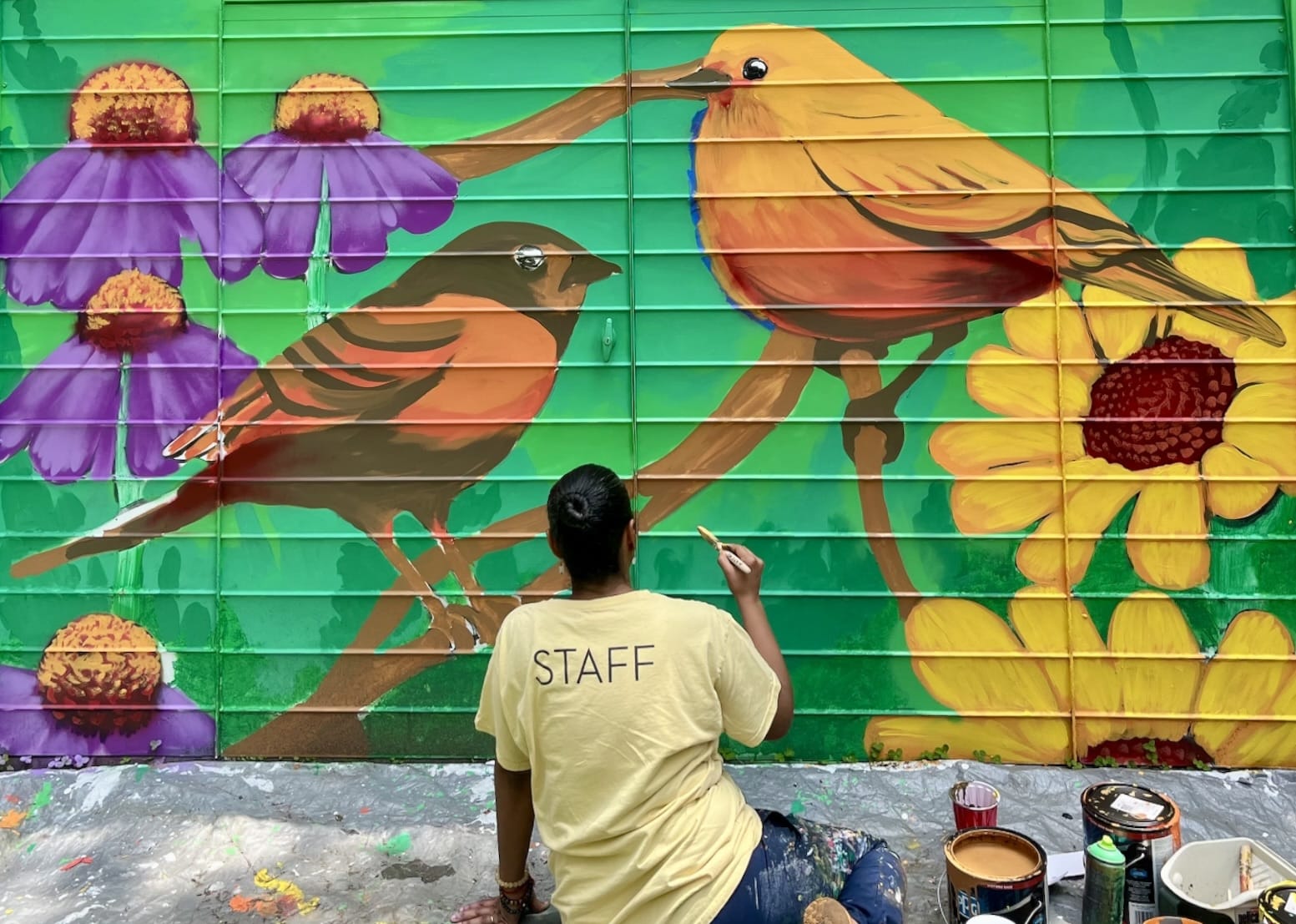
Judith concentrates on native plantings and ecological adaptation to offer a controlled environment for vegetation to succeed. One of its newest additions, built on top of the garden shed with support from CitizensNYC, is a rooftop pollinator garden. Employing a multifaceted approach to mitigating the urban heat island effect, this garden utilizes solar panels, rainwater filtration systems, and drainage structures to lower surface temperatures. Here, resilience is built through steady, sustainable steps. Native plants attract repeat pollinators, drainage and filtration systems support regeneration, and cooling strategies offer viability for any germination.
If heat risk varies by neighborhood, Judith is committed to cooling hers down with innovative green infrastructure, noting, “They said, who’s building a rooftop on a shed in Harlem? It sounds like something California…or Brooklyn would do, but no one would say Harlem.”
And while the garden effectively adapts to the rising heat, Uptown & Boogie understands that these effects are felt most deeply by the people who move throughout the city. Connecting more than 1,000 families each week to sustainable, local food systems, Uptown & Boogie hosts farmers markets, agriculture programs, and youth-centered learning initiatives. In transforming environmental concepts into tangible, integrated pieces, climate resilience becomes a practice that can be seen, learned, and lived. And while these changes may start at the scale of a simple garden, they point toward broader possibilities for New York to adapt its existing infrastructure to meet climate challenges.